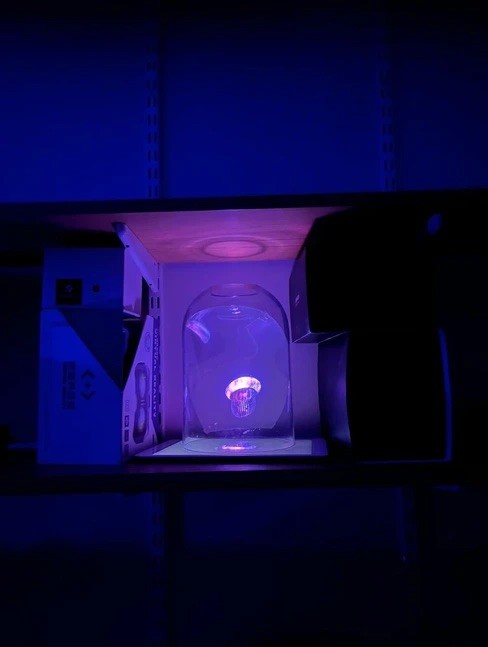
For the final project of my master's degree, we were given the freedom to do anything at all as long as it involved some kind of digital media. My group and I created what we called the 'Interactive Digital Aquarium' - an exhibit that showcased motion-reactive 3D models of imaginary sea creatures, displayed in glass jars in a Pepper's Ghost-style illusion.

When we received the brief, we immediately aligned on two themes we wanted to explore: art and motion-reactivity.
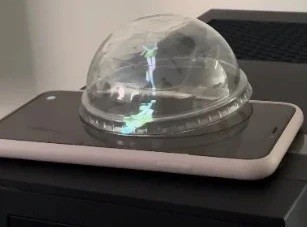
One of my teammates, James, introduced us to Pepper’s Ghost, a classic stage illusion that uses angled transparent film inside a glass jar to create hologram-like visuals. We experimented with the effect and realized it was the perfect way to bring our imaginary sea creatures to life.
After several weeks of discussion and prototyping, we arrived at our final concept: a digital aquarium where each jar contains a different motion-reactive creature.
Month 1
The first month focused on:
✽ Designing our fictional sea creatures
✽ Researching how to make them respond to human movement
✽ Experimenting with tools and sensors
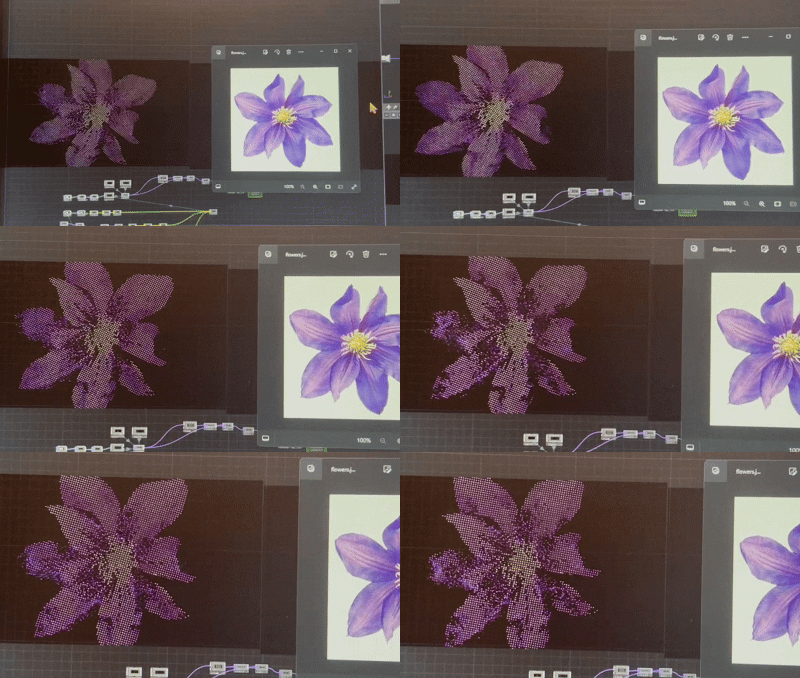
Although we were already comfortable with 3D software like Blender and 3DS Max, we needed a platform that allowed for real-time interactivity. Through experimentation we landed on TouchDesigner, which enabled us to:
✽ Animate our 3D visuals
✽ Connect them to LeapMotion and Kinect sensors
✽ Create reactive behaviours based on user movement
This became the foundation of the entire project.


Month 2
During the second month, we moved into production:
✽ Building and animating the sea creatures in TouchDesigner, Blender, and 3DS Max
✽ Experimenting with Pepper’s Ghost setups
✽ Procuring jars and transparent film and assembling the physical illusion system
This phase was highly iterative, requiring constant adjustments to both the digital and physical components.

Month 3
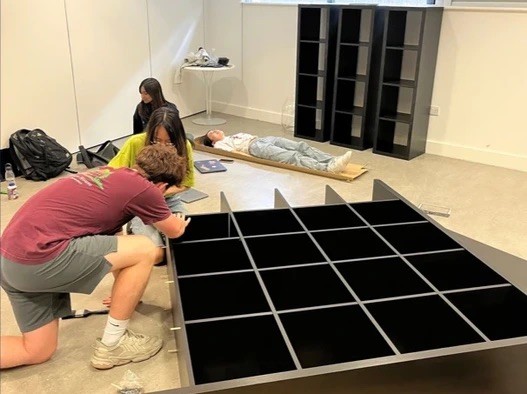
By month three, most of the modeling and animation was complete, so we shifted our focus to the installation. We set up our exhibit in the Science Gallery at Trinity College Dublin, testing lighting, jar placement, and sensor accuracy.
We also composed background music using Ableton and an M-Audio Oxygen 25 MIDI keyboard to create a more immersive experience.

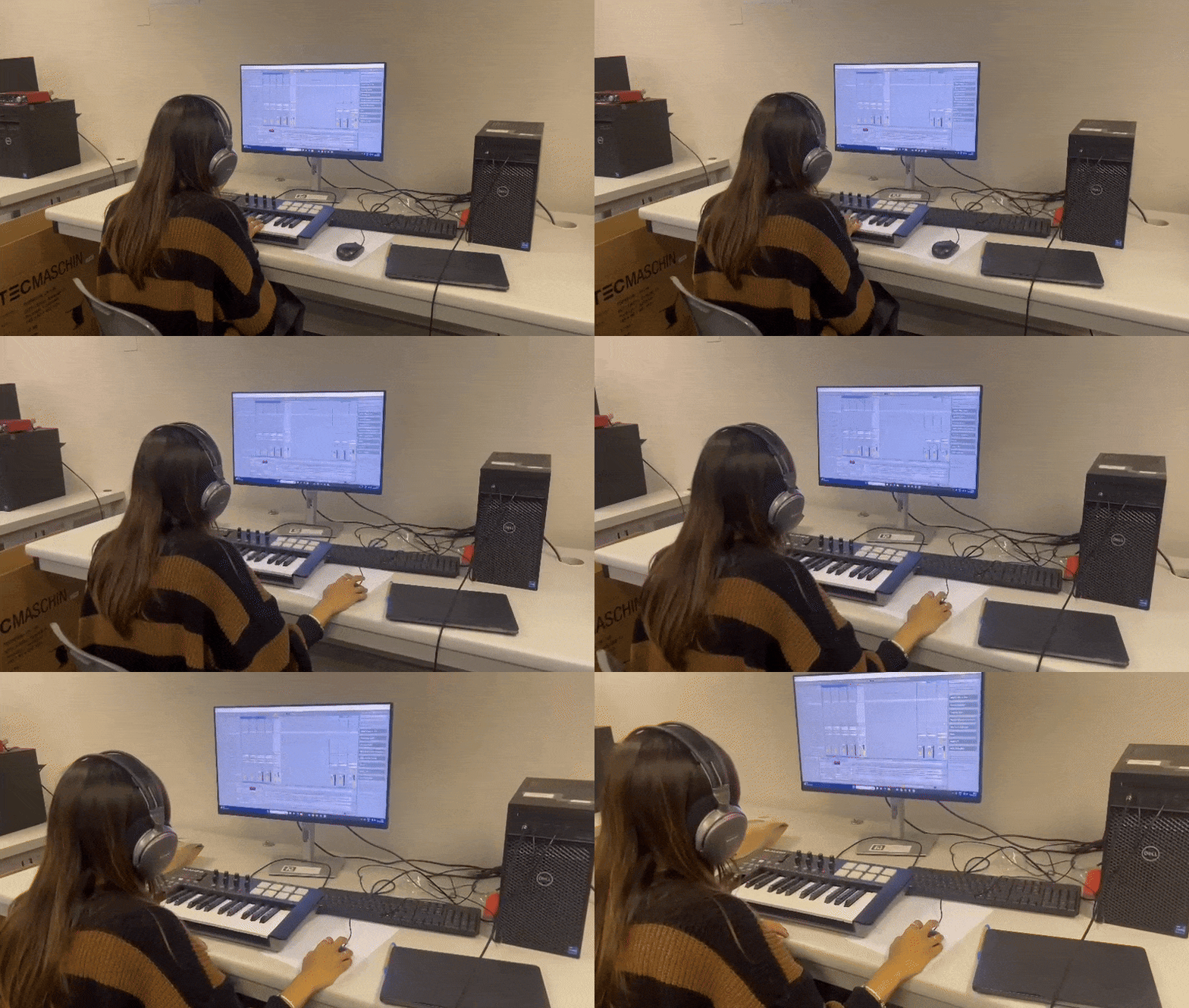
This remains one of the most enjoyable and creatively fulfilling projects I’ve ever worked on.
Learning tools like TouchDesigner and Ableton under tight time constraints was challenging but incredibly rewarding. More importantly, the project pushed us to combine art, interaction, and physical installation in a way that made full use of the resources available to us.